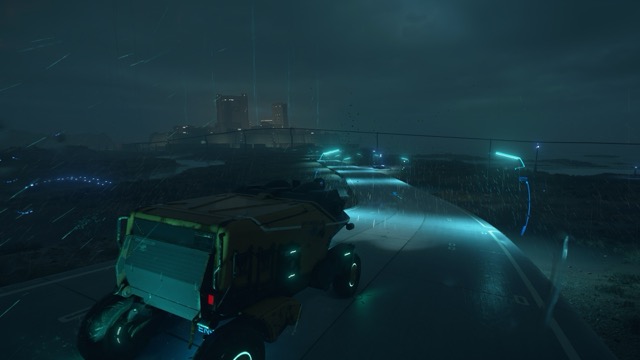
Delivering Cargo at the End of the World
Death Stranding came out mere months away from the COVID-19 pandemic that reshaped our entire planet. We are still coming to grips with things that have changed irrevocably. DS2: On the Beach released at the end of June 2025, eight months prior to our current global situation. We are in the midst of seismic global change that will, like the pandemic before it, have reverberations for years to come.
I write the above not to say that a new Kojima game necessarily presages historical events, merely to note that it’s a remarkable coincidence. Here I am, once again, playing a game about delivering packages at the end of the world. And what a world it is! In the game, I mean. The real world is uh… I don’t know how to finish that thought.
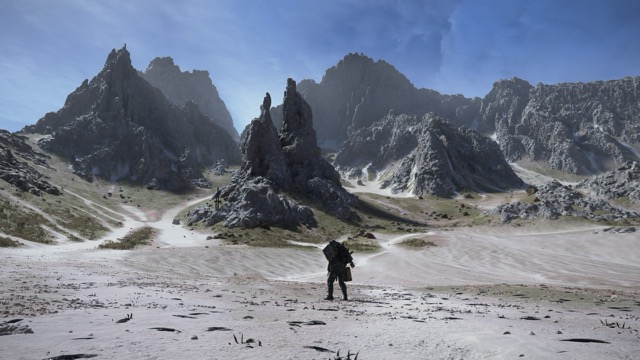
You’re thrown into the swing of things pretty quickly in DS2. Your first couple of missions see Sam Bridges once again donning his delivery gear to connect Mexico to the chiral network. The core gameplay is unchanged: accept delivery missions, plot your route, collect lost cargo on the way, navigate the terrain, and repeat. There is a bit more focus on fighting, including more boss fights than the first game (at least so far). The controls feel a bit tighter, making the combat more forgiving. The boss fights have been enjoyable. At least two of them featured old-school glowing red weak spots.
I was less interested in the combat mechanics in the original game. I think I would have enjoyed it even more if they were completely absent. Here, however, I feel a bit more willing to embrace it. Maybe it’s because the player is given even more tools to take down enemies in a variety of manners than before, like the all-new sniper rifle. Or perhaps those tighter controls are making the biggest difference.
One particularly welcome change is the addition of Sam’s stats. As the player completes missions, Sam’s stats improve, giving bonuses to carrying capacity, stamina, and fighting styles. It’s satisfying in that “number-go-up” way all-too familiar to games. I welcome the free dopamine.
There are also APAS enhancements which are unlocked as missions are completed. These are skills that can be changed at any time, giving all sorts of beneficial effects, like making it easier to shoot, or improving vehicle battery consumption. A player could ignore them entirely if they don’t want to engage with them.
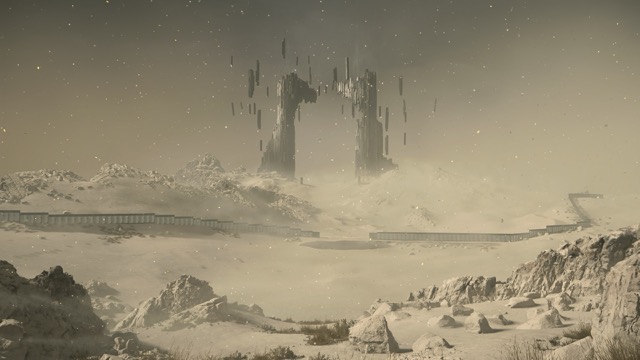
I’ve tried to stay away from spoilers. The few things that I’ve seen people mention about DS2 is how beautiful the game is. They’re correct. The developers know how to use the landscape to impress. The overhauled photo mode makes it easy to capture screenshots of the stunning areas. To conserve bandwidth, I’ve only included a handful of the photos I’ve snapped.
A few more random thoughts:
- The world feels a little more alive compared to the original. There is wildlife running about, some of which can be rescued for study at an animal shelter.
- Folks who didn’t like the first game probably won’t like this one. It’s still the same kind of storytelling and gameplay.
- According to an interview with Kojima, he apparently rewrote DS2 after the pandemic because he “didn’t want to predict any more future”. I doubt we’ll ever get to see what his original draft was, but I would be fascinated to see it if he ever decides to release it as a sort of art book.
- I haven’t found Pekora yet. But I will. And I’ll probably never take the hat off.
- They added a music player. In my most recent playthrough of DS1 I thought that they needed one.